Unlocking the Door to Interior Design: A Comprehensive Guide
Welcome to the definitive guide on choosing the perfect interior door, your home’s silent yet essential decor statement. From privacy to space division, let’s explore the pros and cons to ensure an informed decision.
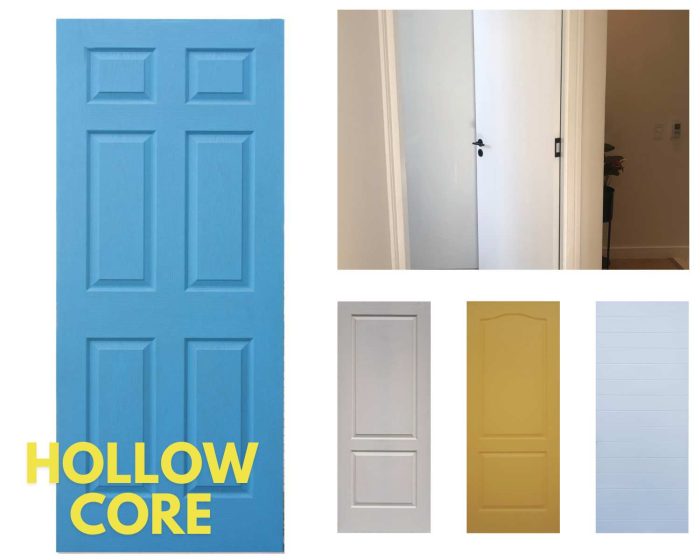
Hollow Core Doors: Crafted with a wood or composite frame, these doors feature thin veneer panels, resulting in a lightweight and budget-friendly option. However, their lack of durability and sound insulation may pose drawbacks.
Pros:
- Lightweight and easy to install
- Cost-effective with minimal expansion
- Pre-primed for painting
Cons:
- Limited durability and security
- Inadequate sound insulation
- Lower-quality feel
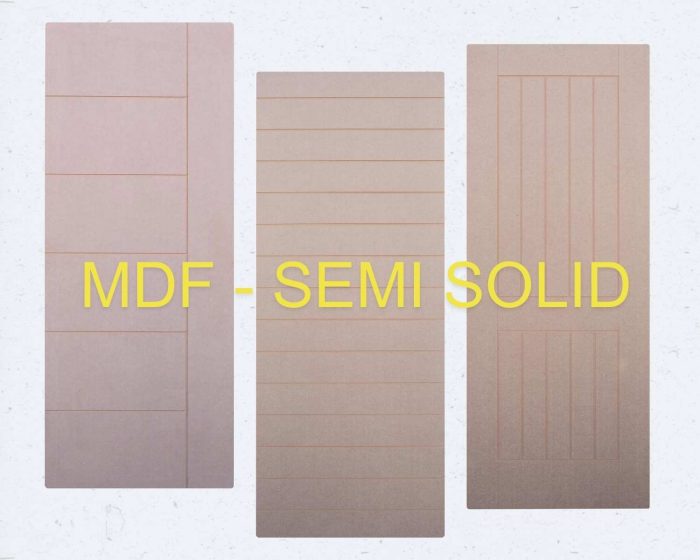
MDF Doors: MDF doors are interior doors constructed using Medium-Density Fiberboard (MDF), a composite wood product made from wood fibers and resin. These doors are popular for their versatility, affordability, and smooth finish.
Pros:
- Versatile designs and profiles
- Smooth surface for easy customization
- Dimensional stability and eco-friendly construction
- Standard stock available in extra height 2320mm
- Can be Custom made
- Perfect for painting or staining to the desired colour
Cons:
- Susceptibility to moisture damage
- Limited repair options compared to solid wood
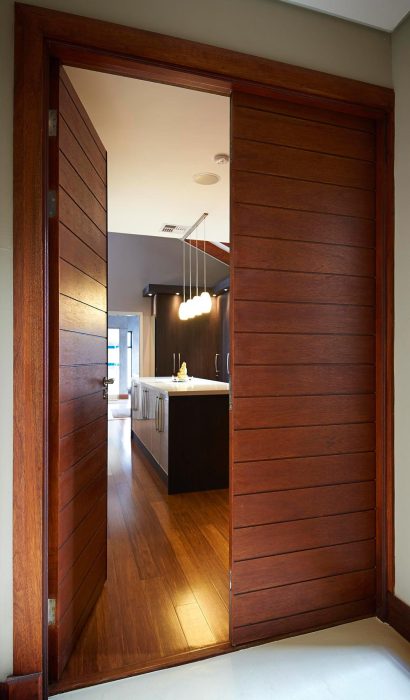
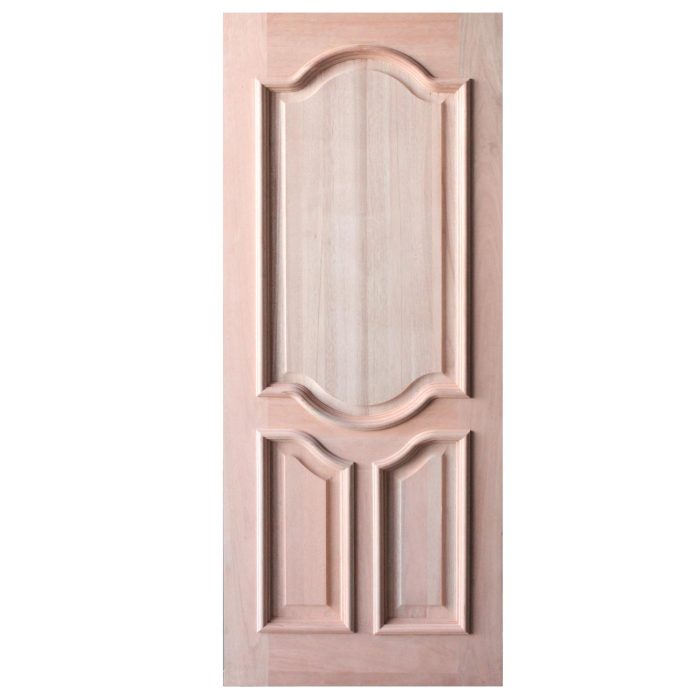
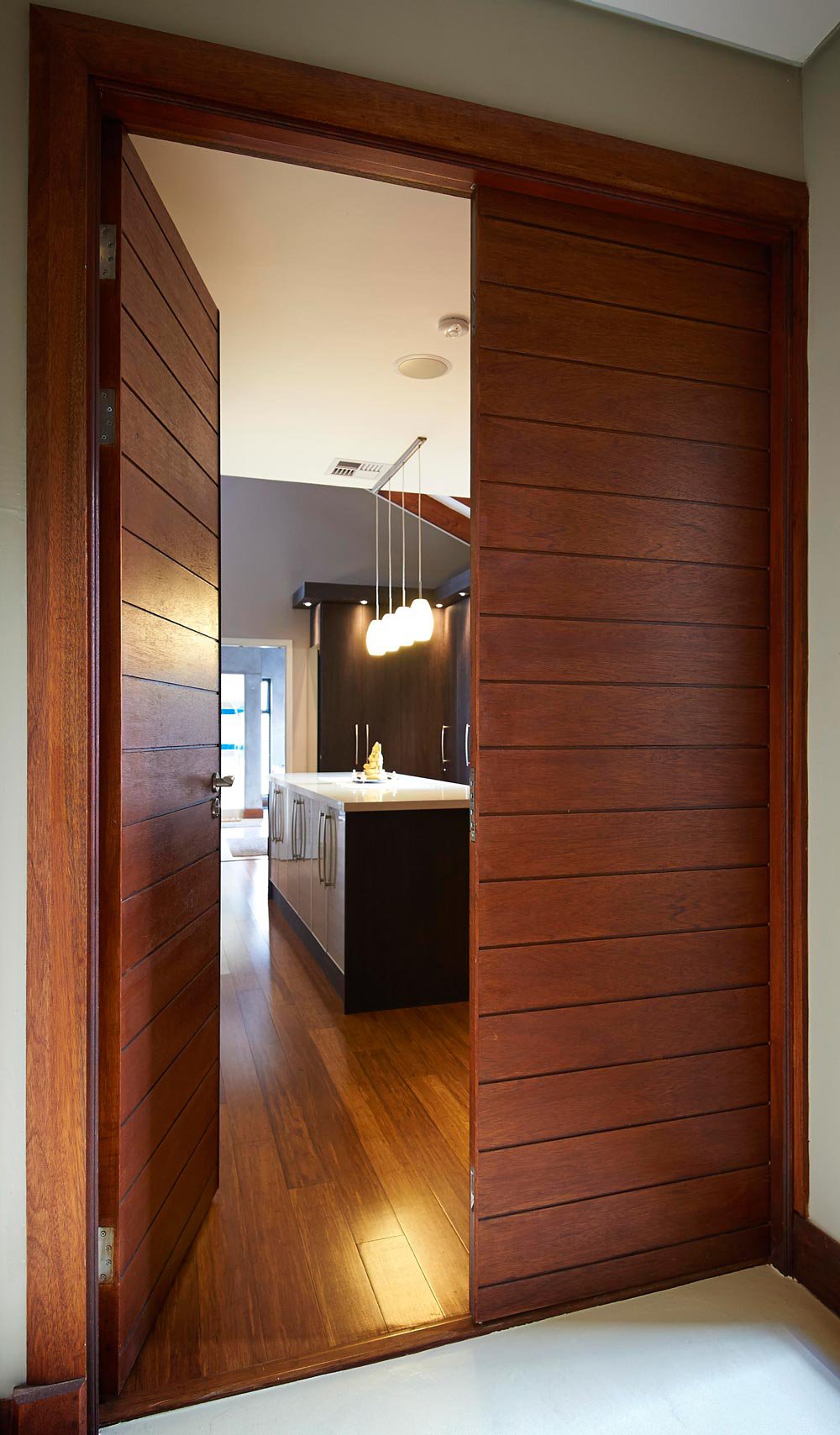
Semi-Exterior and Solid Engineered Doors: Engineered for durability and style using Meranti, Kiaat or Marine Plywood, these doors provide unmatched stability, appearance, and insulation properties, making them a premium yet worthwhile investment.
Pros:
- Superior durability and stability
- Timeless appearance with customizable options
- Enhanced insulation for soundproofing and thermal regulation
- Standard stock available in extra height 2320mm
- It can be custom-made
- It can be stained and oiled in various colours
Cons:
- Higher upfront cost compared to alternatives
- Maintenance required for long-term upkeep