

Most people picture an insulated garage door as one that keeps the garage itself warm. For a garage used to store a car and a lawnmower, that’s rarely worth paying for — nobody spends enough time in there to care whether it’s 15°C or 25°C. What actually changes with insulation has less to do with the garage’s own temperature and more to do with what’s on the other side of that wall: how much a laundry, workshop, or bedroom next door notices the door at all — the heat it lets through on a bad afternoon, the sound of it cycling open and shut, how well it survives a knock. Of those three, it’s usually the sound that catches people off guard.
It’s the Room Next Door, Not the Garage
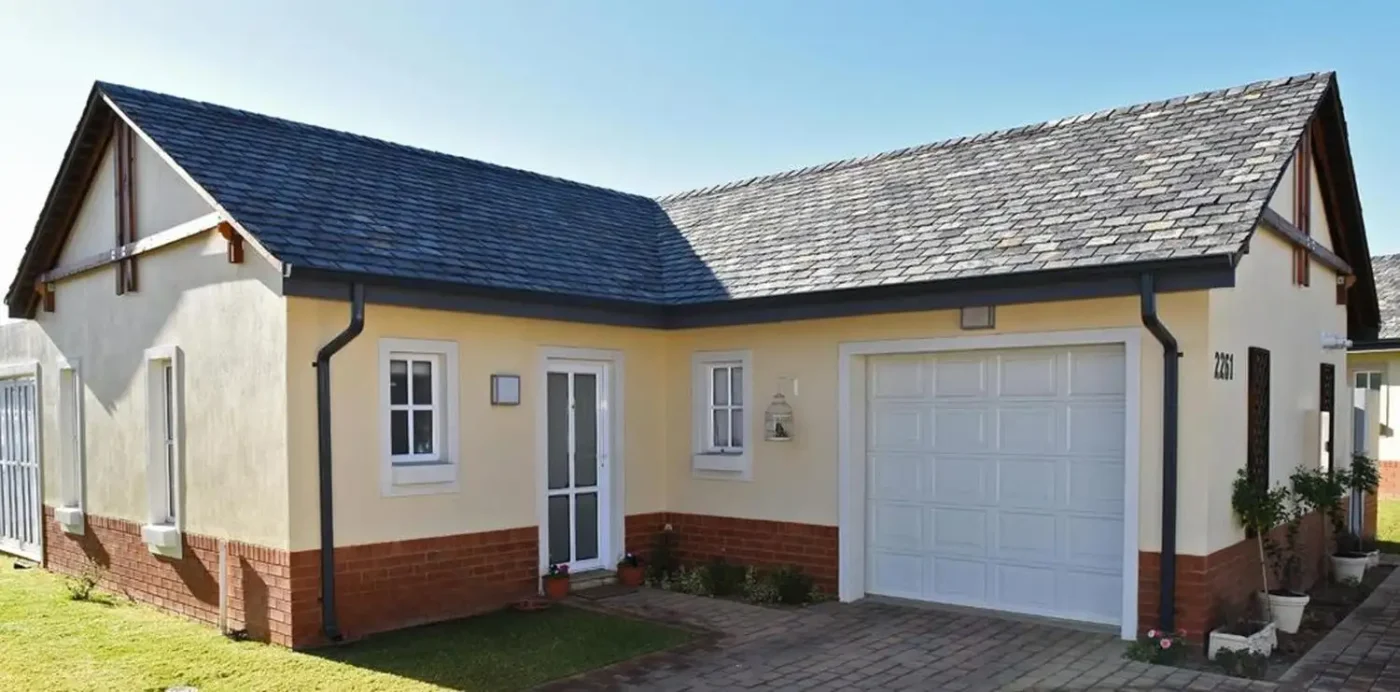
A detached garage’s own temperature is nobody’s business but the car’s — whatever gets through the door stays in a space nobody spends real time in. An attached garage is a different case entirely, because the door isn’t a wall around a separate building. It’s one wall of the house, and whatever crosses it doesn’t stop at the garage — it carries straight into whatever room shares that wall: a laundry, a home gym, a workshop, sometimes a bedroom directly above.
Heat is the obvious one. On a west- or north-facing door catching full Highveld sun, that shared wall can run noticeably warm by late afternoon — enough to matter in a laundry or gym, not just uncomfortable to touch on the way past. Along the coast, the same wall works the other way: humid air meeting a cold metal panel on the inside can reach dew point and condense, leaving a damp film that marks the floor and rusts anything metal stored against it.
But the door doesn’t only pass heat through to that room. It passes sound through just as easily — and for a room people are actually standing in every day, that’s often the one they notice first.
The Sound Is Usually What People Notice First
A single metal skin makes a good drum. It’s thin, unsupported across most of its face, and resonates readily — which is why an uninsulated door cycling open at 6am, right under a bedroom, sounds like it does: not just the motor, but the panel itself ringing with every roller that passes over a track joint. The same thing happens from the outside in a Highveld thunderstorm, when wind-blown debris hits the door and the whole panel booms rather than just taking the knock quietly. In a workshop or garage used as a practice space, that same resonance works against whatever’s happening inside it too — tools, machinery, anything with its own vibration gets amplified by a skin that’s already primed to ring.
An insulated panel doesn’t do that, because there’s something bonded between its two skins instead of empty space. That core — foam, or a composite fill — absorbs vibration rather than passing it straight through, the same way a solid door sounds different closing than a hollow one does. It’s a small, physical thing, but it’s the difference between a door that announces itself every time it moves and one that doesn’t — and it’s usually the change people notice first, well before they’d ever notice a difference in temperature.
What’s Actually Doing the Work
The construction behind both the heat and the sound difference is the same. A single-skin door — a plain aluminium panel, for instance — is one continuous piece of material with nothing between the outside face and the inside one. An insulated door bonds a core between two thin skins instead, and that core does two jobs at once: it’s a poor conductor of heat compared to the metal either side of it, so a well-built insulated door can let through roughly a third of what an uninsulated one does, and it’s the same layer that damps the vibration described above. Timber gets a version of the heat side of this for free — wood conducts heat over a thousand times more slowly than aluminium does, simply as the material itself, without needing an engineered core behind it.
That same bonded construction changes how the panel handles a knock, too. An unsupported single skin flexes and dents easily, because nothing holds it away from the point of impact — a stray soccer ball or a reversing bumper leaves a mark. Spacing two skins apart with a core in between gives the panel far more resistance to bending for very little added weight, so an insulated panel tends to be the more forgiving one the day something bumps into it, on top of the difference in heat and sound.

What This Means for Material Choice
Within Van Acht’s own range, this comes down to which construction a panel is built on, not a blanket choice between materials. Timber doors get the heat side of this benefit for free, from the wood itself, which is part of why the question matters less for a wooden garage door than it does for the aluminium range specifically. On the aluminium side, the real distinction sits between a composite panel — built around the bonded core described above — and a single-skin aluminium profile chosen for a different reason entirely, a fluted finish’s texture or Alu-Zinc’s coating and appearance, rather than for thermal or acoustic performance. Neither is the wrong choice; they’re answering different questions.
The honest version of this decision has very little to do with picking a “better” garage door and a lot to do with what’s actually on the other side of it:
- A workshop, gym, or bedroom sharing that wall feels the sound difference immediately, regardless of climate — this is usually the one that decides it.
- A west- or north-facing door on an attached garage adds real heat transfer to the case, especially into a laundry or living-adjacent room used through the afternoon.
- A coastal, humid-air location adds condensation to the list of reasons a single-skin panel can be the wrong call against an interior wall.
- A detached garage used purely for storage — a car, tools, a lawnmower — gets little practical benefit from any of the above. Nobody’s comfort depends on that room.
That’s the actual question worth answering before comparing constructions: not which door insulates better in the abstract, but who’s on the other side of this particular wall, and what they’d actually notice.