
Almost every supplier will tell you aluminium is durable, low-maintenance, and won’t warp or rot the way timber can. That part is largely settled — it’s true, and it’s not really the decision anymore. The decision is which configuration, which spec, and which finish actually suit the opening you’re filling, the way you use that part of the house, and the part of the country you’re in. Get that wrong and you end up with a door that’s technically aluminium but wrong for the job — too much glass swinging on a hinge where a slider belonged, or a finish that wasn’t specified for what the coast does to hardware. This is a walk through what actually drives those choices, not a list of everything aluminium comes in.
What Aluminium Solves, Structurally
Two properties do most of the work. The first is corrosion resistance — aluminium doesn’t rust, and a properly powder-coated or anodised frame holds its colour and its surface for years without repainting. The second, less talked about, is structural strength relative to weight. Aluminium sections can span wider openings with a slimmer frame than timber or steel of equivalent strength, which is why you’ll see much larger glass expanses in aluminium sliding and folding doors than in almost any other material — the frame simply needs less material to do the same structural job, so more of the opening stays glass.
That combination is what makes aluminium the default for anything where the opening itself is large or the sightlines matter — a patio door meant to disappear into the wall, a bank of windows meant to bring a room’s view inside. Thermal break systems, where the inner and outer sections of the frame are separated by an insulating barrier, address the one real weakness of a metal frame: aluminium conducts heat well, so an unbroken frame transfers outdoor temperature into the room faster than the glass does. A thermally broken frame closes that gap, and matters more in some parts of the country than others.
The finish carries its own decision. Powder coating applies colour as a dry pigment, electrostatically bonded and then oven-cured onto the frame — it comes in the widest colour range and is the standard choice for most residential work. Anodising instead builds up the frame’s natural oxide layer electrochemically, giving a finish that’s part of the metal itself rather than a coating sitting on top of it — usually limited to a narrower set of natural and metallic tones, but with a scratch resistance that a surface coating can’t quite match. Neither is the “better” finish in the abstract; a powder-coated matte black frame and an anodised silver one are answering different briefs, one built around colour choice and the other around a specific, harder-wearing surface.
Matching the Opening to What It Needs to Do
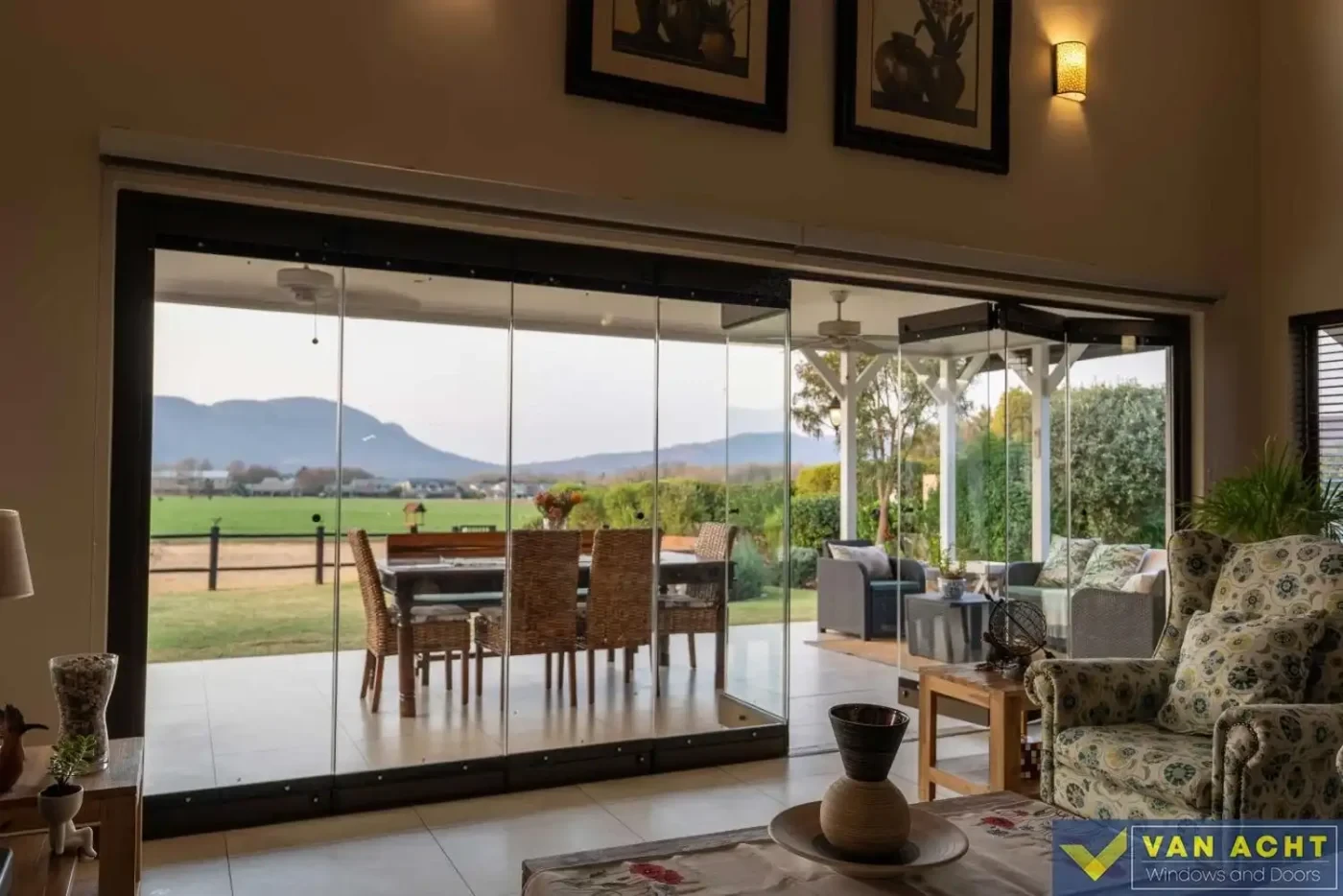
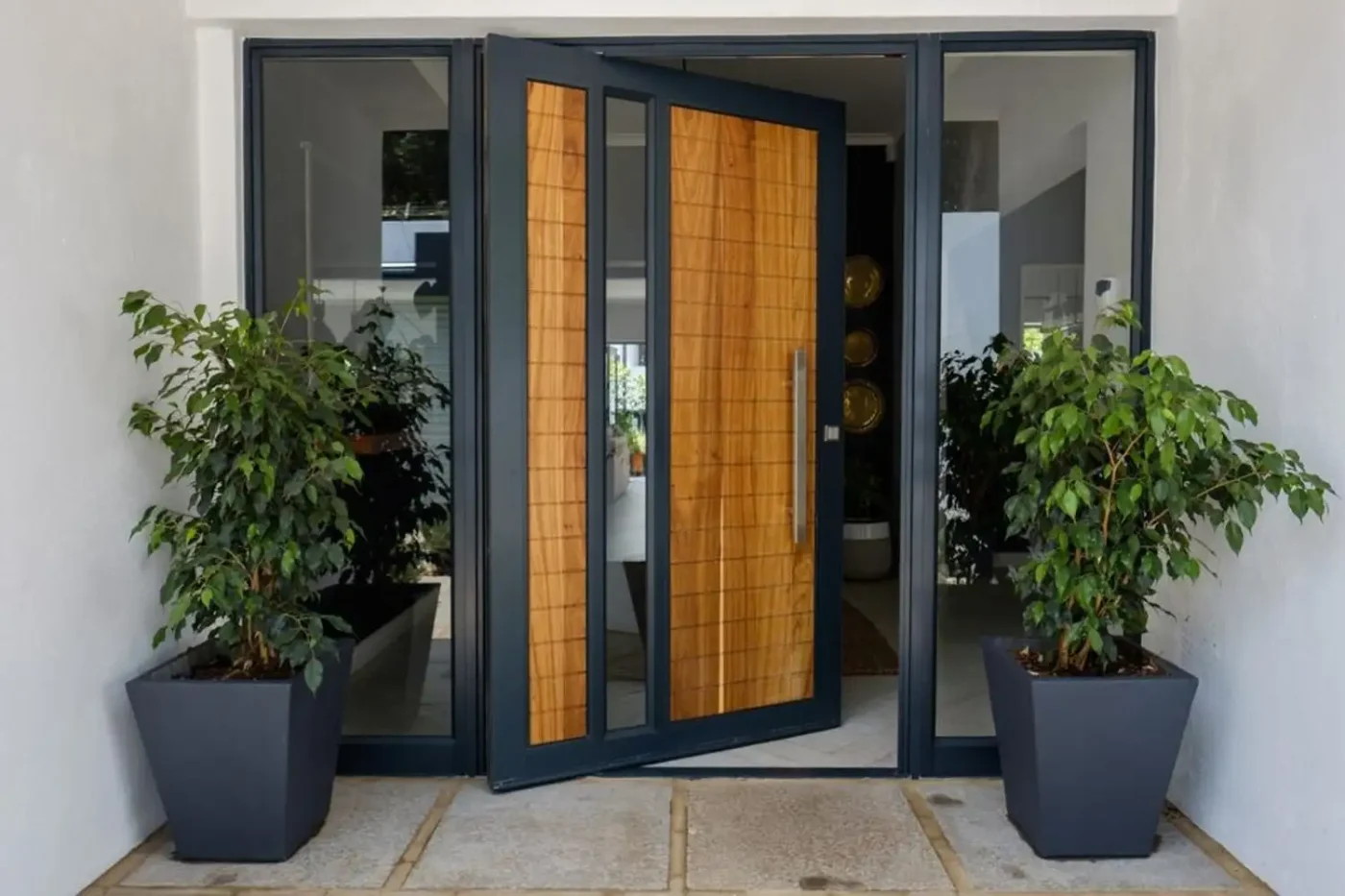
The honest starting question isn’t “which aluminium door” — it’s what that opening actually needs to do. A patio opening built for indoor-outdoor living wants to disappear entirely: a sliding door keeps the full width usable without swing clearance, while a folding or stacking door goes further and opens the wall almost completely, at the cost of a wider stacking zone when it’s open. A formal entrance is a different problem — it’s read once, on arrival, and a hinged or pivot door earns its keep there on presence rather than on how much it opens. A pivot door in particular carries its weight on a top-and-bottom pivot point rather than side hinges, which lets it scale up to a size a hinged door of the same weight would struggle to swing cleanly.
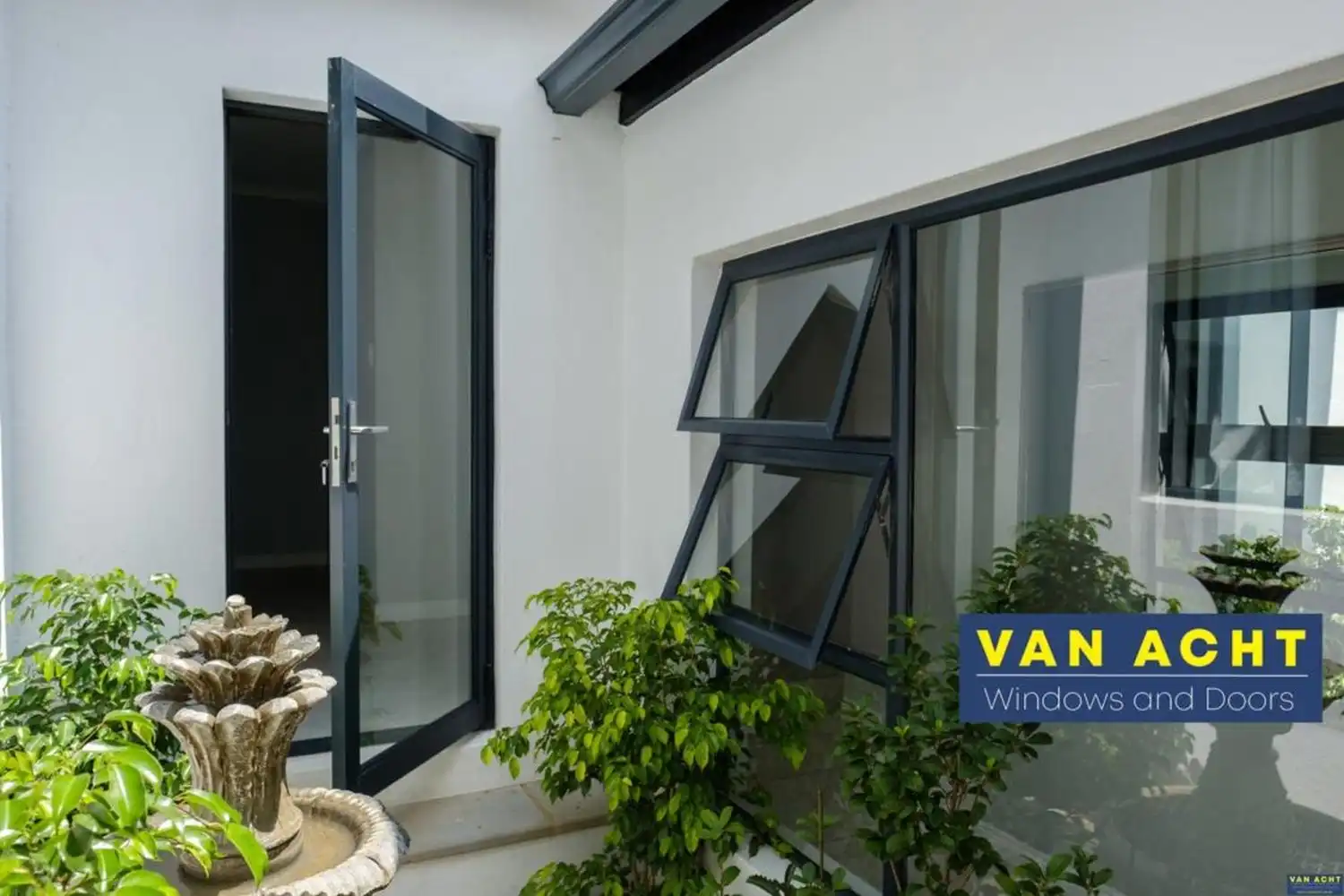
Windows follow the same logic, just answered by airflow and light instead of movement of people. A casement window opens fully outward on a side hinge, giving close to 100% of the frame as ventilation — the right call for a room that needs real airflow, not just light. A top-hung window does the same on a top hinge, useful where you want ventilation without the swing arc a casement needs at head height. An awning window, hinged at the top and opening outward from the bottom, lets air move even while it’s raining, which makes it the standard choice for a bathroom or a window left open unattended. A louvre window trades a sealed view for maximum airflow through adjustable horizontal slats — good for a space that needs air moving more than it needs to be seen through, like a stairwell or a scullery. Where the priority is light with no need to open the space at all, a fixed pane costs less to install and gives up nothing on brightness. And where the priority is glazing a wide opening without needing swing clearance on either side, a sliding window does for windows what a sliding door does for a patio.
A folding or stacking door is worth a specific mention, because it’s the one configuration where the opening’s context matters as much as the door itself: when fully open, the panels concertina into a stack at one or both ends, which needs its own clear wall space to sit against. That stacking zone is easy to miss on a floor plan and awkward to fix after installation, so it’s worth confirming before the door is manufactured, not after.
None of this is a checklist to work through in isolation — a home usually needs several of these answered differently room by room, and the right supplier will ask what each opening is actually for before recommending a type, rather than defaulting to whichever configuration is easiest to quote.
Where Security Enters the Spec
Security isn’t an add-on bolted onto a finished door — it’s part of the same specification decision as the opening type, and it’s worth deciding early rather than retrofitting later. Multi-point locking, where the mechanism engages the frame at three to five points along its length rather than one point at the handle, is now standard on most aluminium sliding and hinged doors and meaningfully harder to force than a single-point lock. Laminated glass — two panes bonded around a plastic interlayer — holds together on impact instead of shattering outward, which matters most on ground-floor openings and anything within reach from outside; the interlayer is the same principle used in windscreens, and it’s worth asking for by name rather than assuming standard glazing includes it. Frame-integrated reinforcement, rather than an external burglar guard bolted over the glass afterwards, keeps the security built into the door itself instead of visibly announced on top of it.
The practical implication is that a ground-floor patio door in a high-traffic suburb and the same door on a third-floor balcony aren’t really the same spec decision, even though they might look identical in a catalogue. Where the opening sits relative to street access, and how exposed it is, should shape the lock and glass spec from the start.
How Much the Region Should Weigh In
South Africa’s climate range is wide enough that the same aluminium door performs differently depending on where it’s installed, and it’s worth factoring in even at a national level, not just for the coast. On the Highveld, summer storms arrive fast and heavy, and a dark-coloured aluminium frame in direct sun can carry a surface temperature well over 60°C on a summer afternoon — enough that thermal break specification and proper weathersealing aren’t cosmetic details, they’re what keeps the frame performing through the season. Along the coast, the frame itself resists salt-air corrosion well, but the hardware doesn’t share that immunity automatically — hinges, handles, and pivot sets need a corrosion-resistant finish specified separately, or they become the first thing that fails. In the Lowveld’s humidity, the same salt-air logic applies to mould and mildew risk around seals more than to the metal itself, which tends to favour window types with strong natural airflow. And in the Karoo’s dry heat and dust, the bigger day-to-night temperature swing and the dust itself put more wear on sliding tracks than on the frame — routine track cleaning matters more there than almost anywhere else in the country.
None of these are edge cases — they’re the normal range of conditions a national supplier specifies for daily, and they’re each worth their own closer look depending on where you actually are.
Aluminium Alongside Other Materials
Aluminium isn’t the only material that makes sense for doors and windows in South Africa, and the choice usually comes down to what a specific opening is asking for. Timber — meranti for general use, denser hardwoods like kiaat where a frame needs to hold its shape through big Highveld temperature and humidity swings — gives a warmth and character some homeowners want, provided it’s properly finished and maintained. uPVC suits sliding and folding configurations where a lower-maintenance, budget-conscious frame is the priority. Steel tends to sit in structural or industrial framing rather than residential glazing. What aluminium is generally chosen for is the combination of a wide structural span, low ongoing maintenance, and finish longevity — each material is answering a different brief, and the right one depends on what a specific opening actually needs.
It’s also common for more than one of these to appear in the same project rather than a single material running through the whole house. A renovation that keeps existing timber window frames elsewhere in the house but specifies aluminium for a new, larger patio opening isn’t mixing materials by accident — it’s using each one where its particular strength applies, and a well-specified aluminium frame can sit alongside timber joinery without looking like an afterthought, provided the frame colour and sightlines are chosen with the rest of the house in mind.
Evaluating a Supplier
Once the configuration is decided, the supplier matters almost as much as the spec. Measuring on-site before manufacturing, rather than working from submitted dimensions, is standard practice for custom aluminium work — openings in real houses are rarely perfectly square, and a frame built to the actual opening fits properly the first time. Glazing is a separate decision from the frame itself and worth confirming directly: single glazing is standard and least expensive, while double glazing — two panes with a sealed air gap between them — adds real thermal and noise performance at extra cost, and matters more in some rooms and regions than others. Beyond that, worth asking about directly: whether the finish and colour range covers what you actually want, whether fabrication is done in-house or outsourced, what warranty covers the frame versus the hardware separately, and what installation support is included rather than left to a third party. Van Acht has manufactured doors and windows in South Africa since 1986, and follows the on-site measurement standard as part of that process.
A frame, a finish, and a glazing spec all read differently on paper than they do standing in front of them — the weight of a pivot door, the exact shade of a powder coat colour, the scale of a sliding door against a real wall. Seeing a sample in a showroom before committing is closer to trying on clothes before buying them than reading a spec sheet, and it’s worth the visit if the decision is still open.