
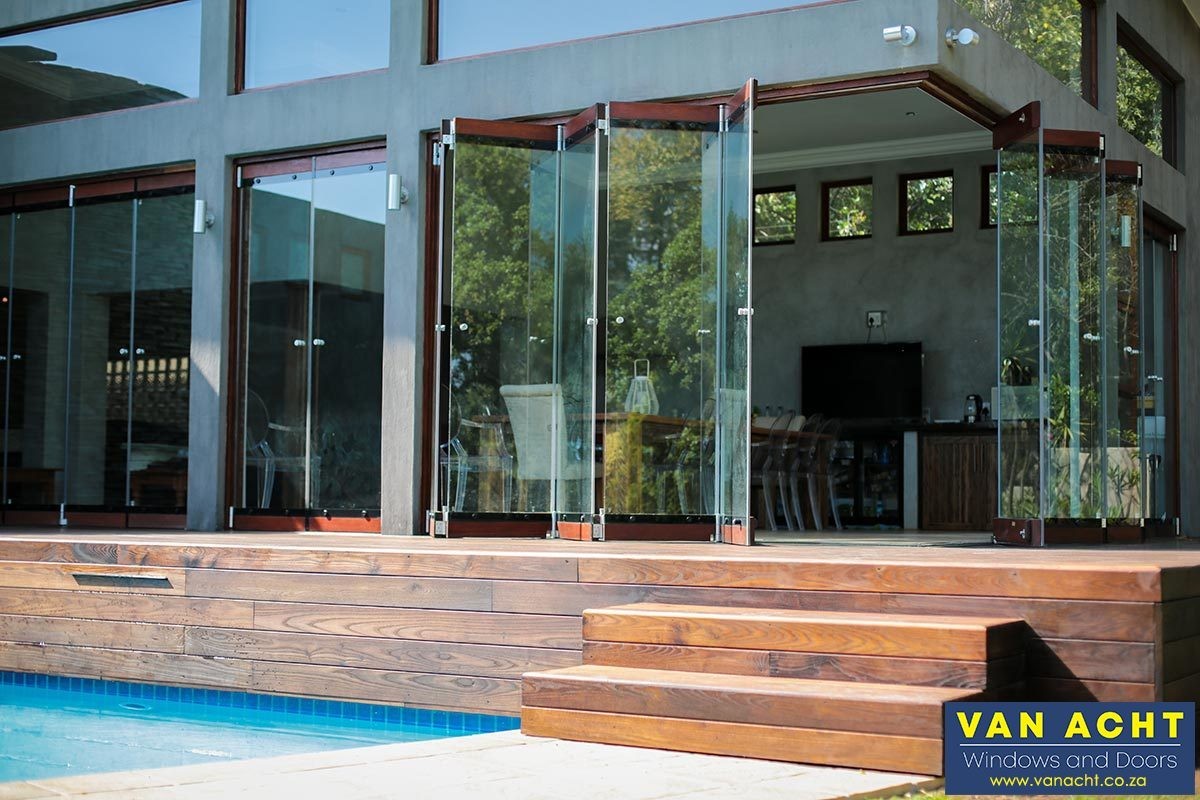
Aluminium Doors and Windows in Pretoria: A Discreet Front, a Glass-Heavy Back
Walk the older streets of Waterkloof or Brooklyn and the houses give little away — a modest window line, a gate, a hedge trimmed to street height. Walk around to the garden side of the same houses and the story changes completely: sliding or folding doors running the width of the house, a covered patio built for daily use rather than special occasions, a pool catching the afternoon sun. Pretoria’s aluminium demand mostly lives on that second side of the house, and what it needs is a different conversation from what the street-facing windows need.
Why Pretoria Asks a Different Question From the Rest of the Highveld
Pretoria sits at roughly the same altitude as Johannesburg, an hour up the highway, and shares the same broad Highveld weather pattern — summer thunderstorms that bring hail on a predictable annual schedule, strong UV at altitude, and a real swing between winter nights and summer afternoons. None of that is unique to Pretoria; it’s true of the Highveld generally, and it belongs on a specification sheet regardless of which part of the region a property sits in.
What is specific to Pretoria is the heat itself. Sitting lower and more enclosed than Johannesburg’s open ridges, with less wind moving through, Pretoria’s summer afternoons consistently run warmer and stiller than Johannesburg’s — the kind of heat that sits in a garden rather than moving through it. That’s exactly the climate that makes an outdoor entertaining space a near year-round feature rather than a summer indulgence, and it’s why so much of the city’s aluminium spend goes into the doors and windows that connect the house to that space, not the ones facing the street.
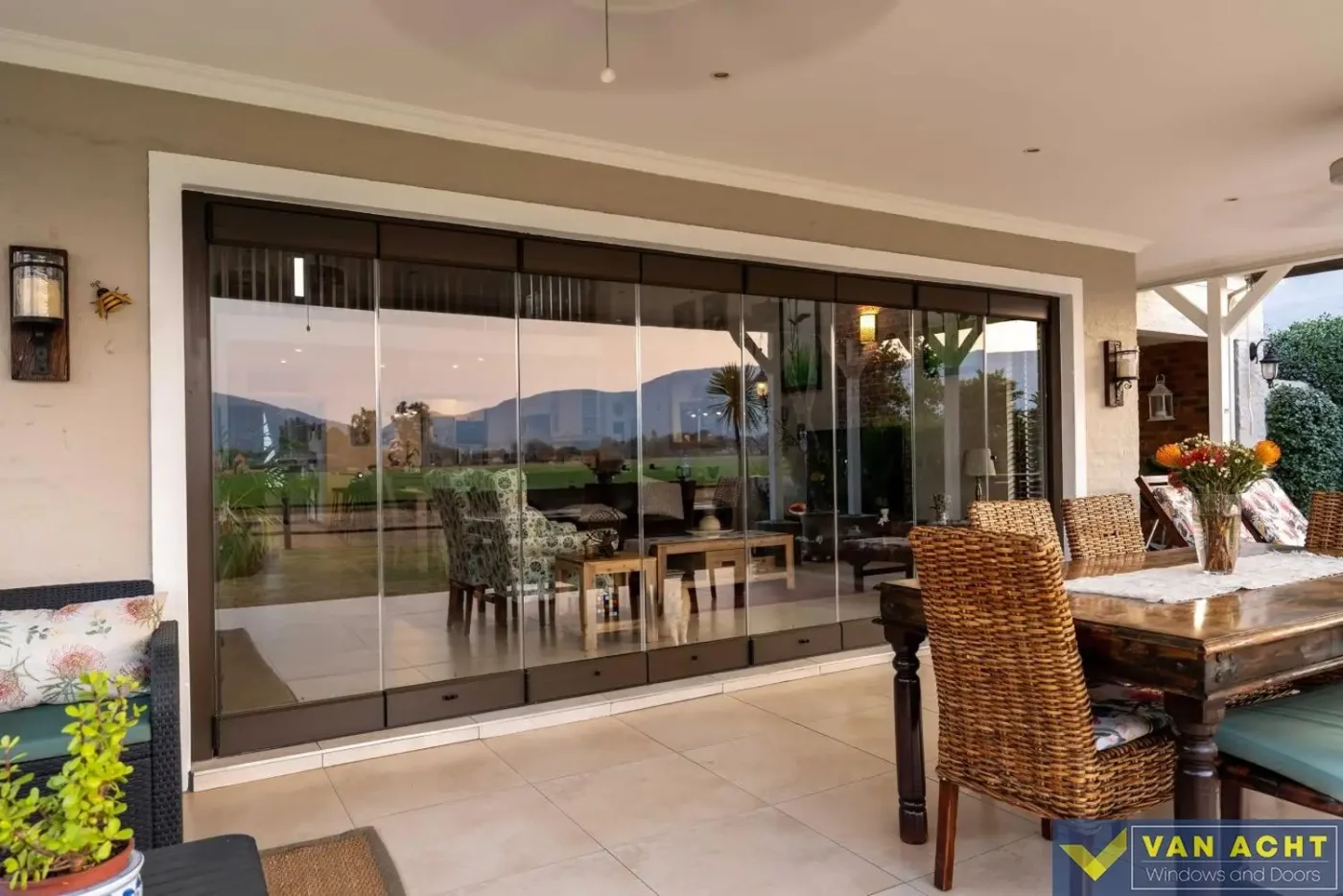
A Discreet Street Face, a Different Story at the Back
Established suburbs like Waterkloof, Brooklyn, and Muckleneuk built their character around a restrained street elevation — face-brick or plastered walls, a modest window count, deep eaves and verandas that were doing passive cooling work long before air conditioning was standard. Replacing those street-facing windows with aluminium is mostly a like-for-like job: matching the existing sightlines and proportions matters more than adding glass area, since the street character is the whole point of that side of the house.
The garden side answers to a different brief entirely. North and north-west facing terraces, pools, and braai areas are where these homes actually get lived in, and the doors serving them tend toward full-width sliding or folding systems rather than a single opening. Further east, in the newer estate corridor around Mooikloof, Faerie Glen, and Garsfontein, that same logic shows up without a street face to protect at all — with no older frontage to preserve, the whole ground floor toward the garden or the estate common area often goes to glass from the first drawing, not just the back.
That difference carries through to sign-off as well as design. An established suburb’s deep eaves and verandas were built by an architect who worked out the shading and proportions on purpose, so matching the existing sightline width when replacing a window there is what keeps the elevation reading as intended. A new estate carries a different version of the same discipline: many developments specify an approved frame colour range or finish as part of the estate’s architectural guidelines, and that gets confirmed with the body corporate before an order is placed, not after a colour has already been chosen. Montana carries a version of the same discipline at a smaller scale, and more consistently — a well-established, family-oriented suburb built up heavily around townhouse rows and security complexes, where checking the body corporate’s approved colour and profile range is closer to a default step than an occasional one, the same sign-off logic as the newer estates further east, just for a different kind of property and a household that puts a back or courtyard door through genuinely daily use.
Where Aluminium Fits Against Timber
Timber holds its own where the original window proportions and a painted or stained finish are part of what’s being kept, particularly on an established street-facing elevation. A garden-facing opening carries a much larger surface area in direct sun for most of the day, and that’s where aluminium’s dimensional stability matters — a heavier-section extrusion resists the expansion and contraction that comes with surface temperatures well above ambient on a dark frame in full Pretoria sun, holding a wide sliding or folding system square through the door’s full working life. Timber can still do this job well with the right species and maintenance; aluminium simply asks less upkeep of an opening that size, which is one reason it tends to be the default once an opening grows past a standard window or two.
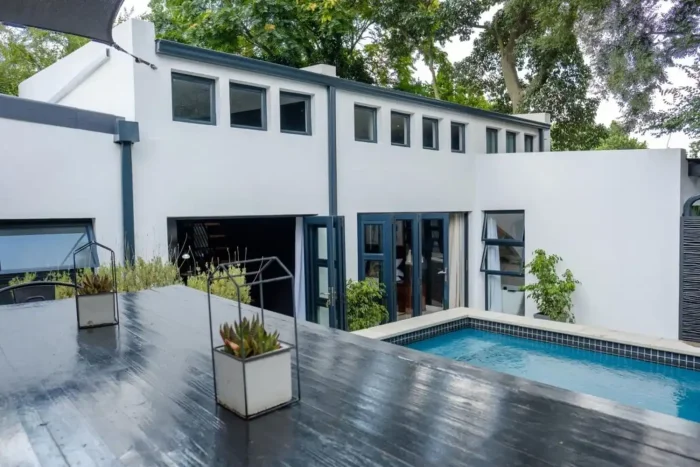
Doors Built for Daily Use, Not Occasional Opening
Choosing between a sliding door and a folding door usually comes down to how the opening actually gets used. A sliding door keeps its panels flush against the wall and suits an opening used constantly through the day — walking in and out to a pool or a braai area doesn’t call for clearing the whole opening every time. A folding door earns its place where the opening needs to disappear completely, for an entertaining space that’s occasionally opened up in full rather than used as a walkway.
Given how often these openings get used in Pretoria’s climate, hardware wear is a real consideration rather than a theoretical one. A track and roller system rated for genuinely daily cycling holds up; one specified as if the door were an occasional feature doesn’t. This is one of the few places where asking a supplier directly about cycle ratings, rather than assuming any aluminium system handles daily use equally well, changes what actually gets installed.
Panel count follows from the same daily-use question. A two- or three-panel slider covers a standard-width opening without needing much wall space to stack against, while a folding door across a wider entertaining opening runs to five, six, or more panels concertinaing to one or both sides — which means confirming there’s enough wall space at either end for the stacked panels to sit against before the opening is finalised, not after manufacturing starts.
Windows and Glazing for a North-Facing Wall of Glass
A covered patio or entertaining area facing north needs airflow as much as it needs a view, and awning or casement windows earn their place here — both can stay open through a summer downpour without letting water in, which a sliding window can’t manage in the same way. Cross-ventilation through a deep, shaded veranda does real work in taking the edge off Pretoria’s still summer air.
The glazing itself carries more of the performance load than the frame does on a north-facing wall of this size. A low-emissivity coating cuts the heat gain coming through that much glass without darkening the room, and lamination adds a layer of hail resistance directly relevant to the same storm season the rest of the Highveld deals with — worth specifying on a large entertaining-side opening even where it wouldn’t be standard on a smaller street-facing window.
Security on the Side of the House That’s Actually Open
A garden-facing opening this size is often the more exposed edge of the property, particularly where the stand backs onto open land, a greenbelt, or a shared estate boundary rather than another walled stand. That’s where security belongs in the frame itself rather than as something added afterward: multi-point locking built into a sliding or folding system, and laminated glass that does double duty against both a break-in attempt and a hailstorm, rather than a separate grille bolted over glass that was never meant to carry that job alone.
Getting the Opening Measured Before It’s Manufactured
None of this is off a shelf. A full-width sliding or folding system is manufactured to the exact dimensions of the opening it’s going into, which means measuring on site — not off the original building plan — matters more here than it would for a single standard window. Older Pretoria homes in particular rarely measure perfectly square after decades of settling, and an opening this size has no room to absorb that kind of discrepancy with trims or fillers the way a smaller window can.
That measurement step is also where the rest of the spec gets confirmed rather than assumed: the glazing package, the hardware rating for daily use, the frame colour against an estate’s approved range if one applies. Settling those details before the order goes in, rather than after manufacturing has started, is what keeps a large custom opening from becoming a costly change midway through.
Specifying each side of the house for what it actually does, rather than treating every opening the same way, is what makes both hold up over time. Van Acht keeps a showroom in Montana, and for a garden-side door this size, seeing the actual frame and glazing in person before ordering is worth the visit — the scale of a full-width folding system reads very differently on a showroom floor than it does on a plan.