
Aluminium Doors and Windows in Klerksdorp and the North West
Klerksdorp sits near the southern edge of the Highveld, where the North West interior stretches out toward the agricultural belt. It is a practical city — established residential suburbs, a university town close by in Potchefstroom, farming communities and mining history in the surrounding areas — and the property market reflects that. People here are not looking for the flashiest option. They are looking for something that works and keeps working.
That expectation is one aluminium handles well. The Highveld climate is hard on materials that need regular attention — hot summers, cold winters, afternoon thunderstorms, and persistent dust between seasons. Aluminium handles those conditions without warping, cracking, or requiring the kind of seasonal maintenance that timber demands in the same environment. A powder coated finish resists UV degradation and cleans easily. The frames do not swell or seize with humidity and heat cycles the way some materials do. Quality weatherstripping plays its part in that too — it is what keeps the seal intact across those temperature swings, and what stops dust working its way through the frame gap during dry season winds.
North West’s dry interior air generates more dust than the eastern Highveld. It settles on everything, and aluminium frames are straightforward to wipe down when it does. Sliding door and window tracks need periodic attention — vacuuming out accumulated grit keeps the mechanisms running as they should — but that is the full extent of upkeep. For a rental property or commercial building where maintenance cost is a real consideration, that is a meaningful economic argument. For a homeowner who simply does not want to repaint or retreat frames every few years, the logic is the same.
Choosing the Right Configuration
Most people arrive knowing they want aluminium. The question is what configuration works for the opening. Most of the decisions come down to how the space is used and what the wall needs to do.
For patio and entertainment access, sliding and folding systems both work well in the North West climate, and the choice between them is primarily about what kind of opening you want. A sliding door — whether single or multi-track — does not require swing clearance, seals reliably against dust, and suits most standard stoep openings without any structural drama. That combination makes it the default for most residential applications in the region, and for good reason.
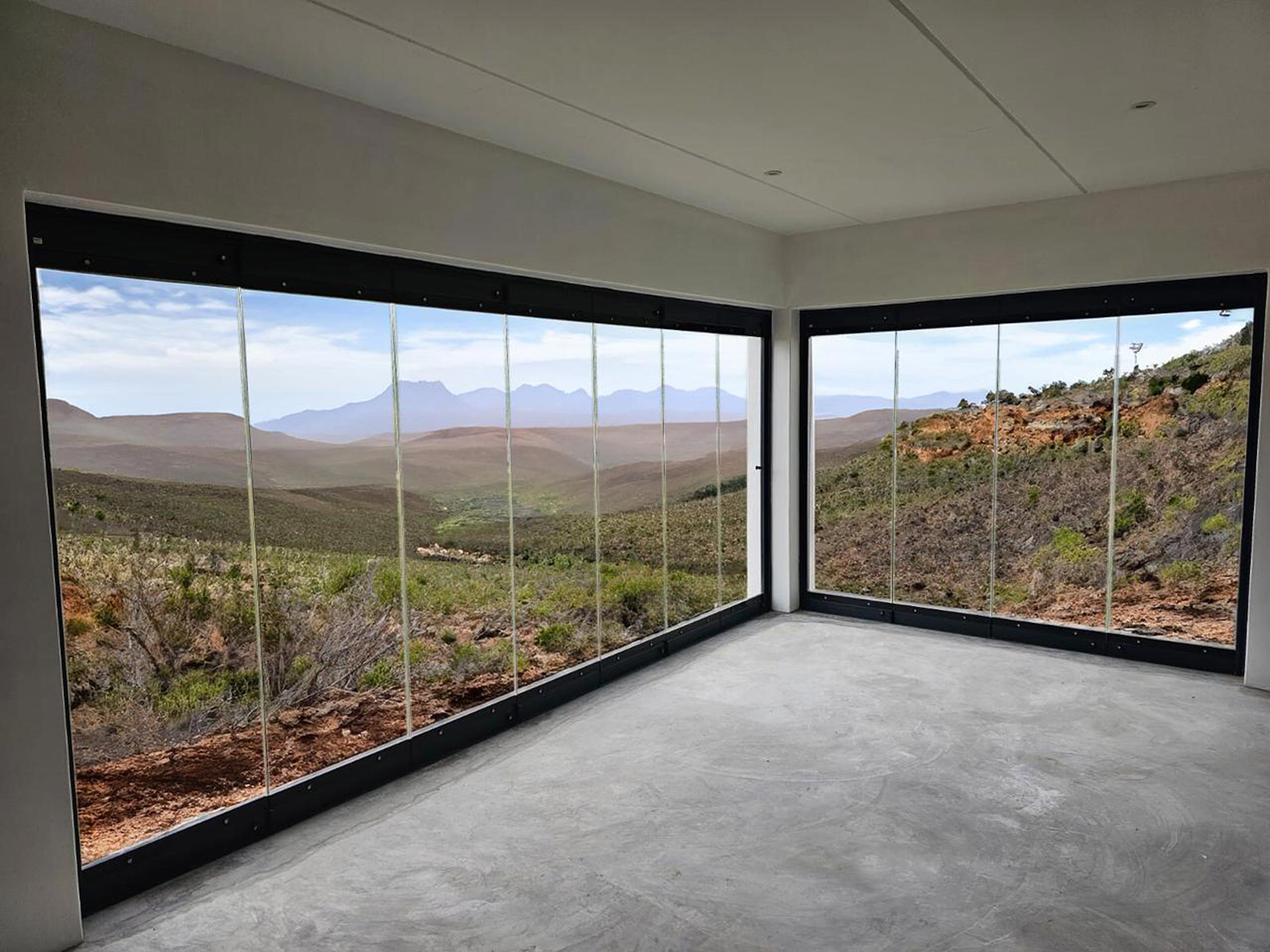
Where the priority is a fully open connection between inside and outside — the kind where the entire wall edge disappears rather than just a portion of it — a folding system is the better fit. The panels stack to one or both sides and leave the opening completely clear, which produces a different relationship between a living area and the outdoors. The trade-off is cost and mechanical complexity: more hardware, more moving parts, and a higher price point. For a property where a full opening genuinely changes how the space is used, that trade-off tends to be straightforward. For a standard stoep where a wide sliding door does the same job for less, it is harder to justify.
For hinged and pivot doors, the considerations shift toward the entrance — security hardware, frame strength, and how the door sits in the facade. Aluminium pivot doors are increasingly common in newer residential builds for their clean sight lines and the sense of scale a wide pivot leaf brings to an entrance, though they are better suited to properties where the architectural context supports that kind of statement.
Windows: What the Wall Needs to Do
For windows, the choice of type is mostly a question of ventilation, weather exposure, and what the room requires. Sliding and casement windows cover the majority of residential applications and are interchangeable in most situations. The meaningful differentiation comes at the edges.
Awning windows — top-hinged, opening outward from the bottom — are useful in a climate where afternoon thunderstorms arrive quickly. They ventilate without letting rain into the room, which makes them the practical choice for bathrooms, laundries, and secondary bedrooms, or placed higher in a wall above a fixed panel where the ventilation requirement is secondary to light. Fixed panels are often paired with operable sections in living areas where the view or light matters more than airflow at that specific point in the wall.
Glazing choices sit outside the frame type decision but affect long-term performance significantly, and they are harder to change after installation than to specify at the outset. Low-emissivity glass reduces heat gain without noticeably affecting light levels — relevant where west or north-facing rooms receive extended direct sun through a Klerksdorp summer. Double-glazed units add an insulating gap that improves both thermal and acoustic performance, which becomes a real consideration for properties on busier roads or in areas where exterior noise is a factor. Neither is essential for every opening, but both are worth thinking through before a frame goes in rather than after.
Aluminium is not the right fit for every application, but for the majority of what Klerksdorp properties need — patio access, residential windows, entrance doors that hold up to a demanding climate without constant attention — it covers the brief well. The decisions are mostly about configuration and specification rather than whether the material is suitable. Van Acht’s Klerksdorp showroom is a practical place to work through those decisions and see the range before committing to anything.