
A Highveld door or window lives through a wide range in a single year. A midsummer afternoon in Gauteng can sit at 33°C under direct sun before a storm breaks it by four o’clock. A June or July night in that same region regularly drops to 2–5°C, and further south toward the Free State interior, sub-zero nights and hard frost are routine. Add altitude — Johannesburg sits at roughly 1,750 metres — and the UV load overhead, and this isn’t a climate that tests a product once a year. It tests it daily, in different ways, all year round.
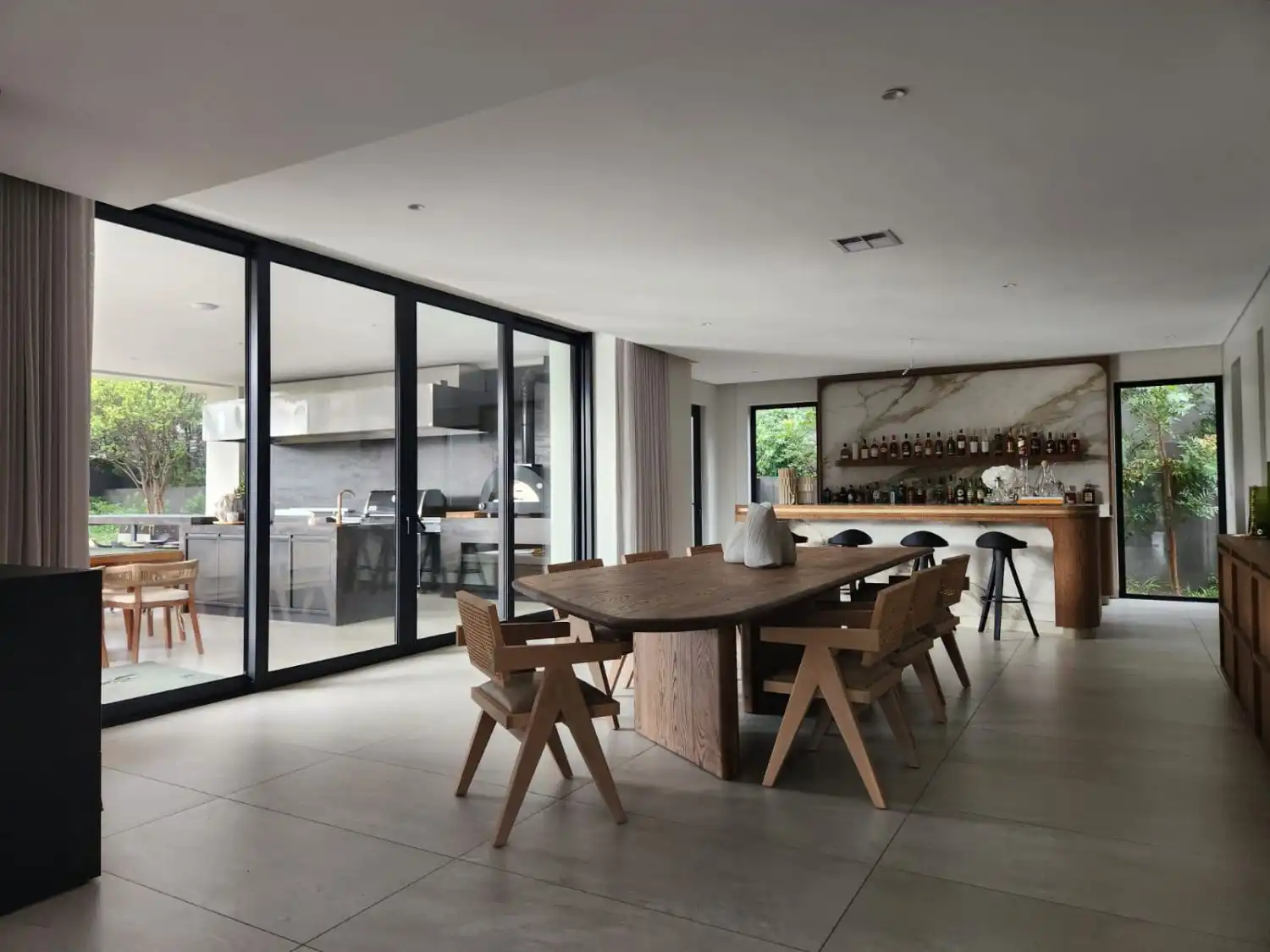
For most of the year, the connection between inside and outside is central to how a Highveld house gets used. Patios, braai areas, and pool decks aren’t seasonal here the way they are elsewhere. A wide sliding door on a north-facing wall, catching sun most of the day, is the most common answer — it keeps the opening usable in daily traffic and holds a clean sightline to the outside even closed. Where the moment calls for the wall to disappear entirely, a folding door goes further, stacking its panels to one or both sides, at the cost of more moving parts and more upkeep. Windows on the same walls face a related choice: a casement window opens its full panel outward on a side hinge for real cross-ventilation, while an awning window, hinged at the top and opening outward at the bottom, stays open through a light shower without letting water in.
That’s the shape of the house. What follows is what the climate actually does to it — three things get tested, in different ways, across the whole year: the finish, the frame, and the seals and tracks.
The Finish
UV radiation at altitude is meaningfully stronger than at sea level, and it works on a frame’s coating every day the sun is out — not just during a storm or a cold snap. An inferior powder coating can chalk, fade, or lose surface integrity within a few years under that load. Two frames can look identical on a showroom floor and behave very differently five summers later.
Colour plays into it too. A dark frame absorbs meaningfully more heat than a light one, which is where the finish and the frame’s behaviour start to connect.
The Frame
Aluminium moves with temperature, and the Highveld gives it a lot to move through. In summer, a dark-coloured frame in direct sun carries real heat, and on a large sliding or folding door that heat becomes measurable thermal expansion along the profile. Track alignment and expansion allowance belong in the specification from the start, not something discovered after a door starts sticking on a hot afternoon.
Winter asks the opposite of it. Aluminium conducts heat efficiently by nature, so an unbroken frame lets cold move from outside to in almost as readily as it let summer heat move the other way. A thermal break — a non-conductive strip, usually polyamide, set into the frame profile — interrupts that transfer, and cuts down on the condensation that shows up on interior surfaces on cold mornings. That condensation is worth taking seriously beyond the fogged-glass inconvenience: moisture beading on an unbroken frame has to go somewhere, and over a winter it tends to end up on sills, curtains, or nearby timber as a slow, low-grade damp problem. Double glazing extends the same logic to the glass itself, trapping an insulating air layer between two panes — it costs more upfront and earns that back in comfort on cold nights, particularly in south-facing rooms that get little direct winter sun.
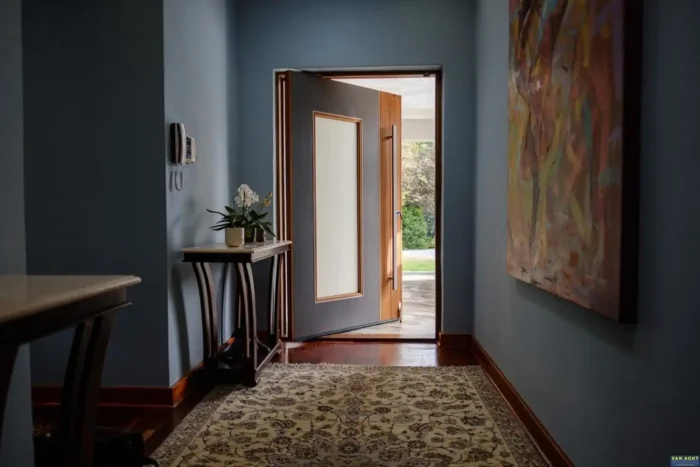
Scale changes how much all of this matters. A pivot door — one that rotates on a top-and-bottom pivot point rather than side-mounted hinges — can carry a panel considerably larger than a hinged door of the same weight would manage cleanly, which is why it shows up as an entrance statement in contemporary builds rather than an everyday door. More aluminium in the frame means more mass moving through the same expansion-and-contraction cycle described above, so correctly specified hardware and precise installation matter more here than on a standard door, not less.
The Seals and Tracks
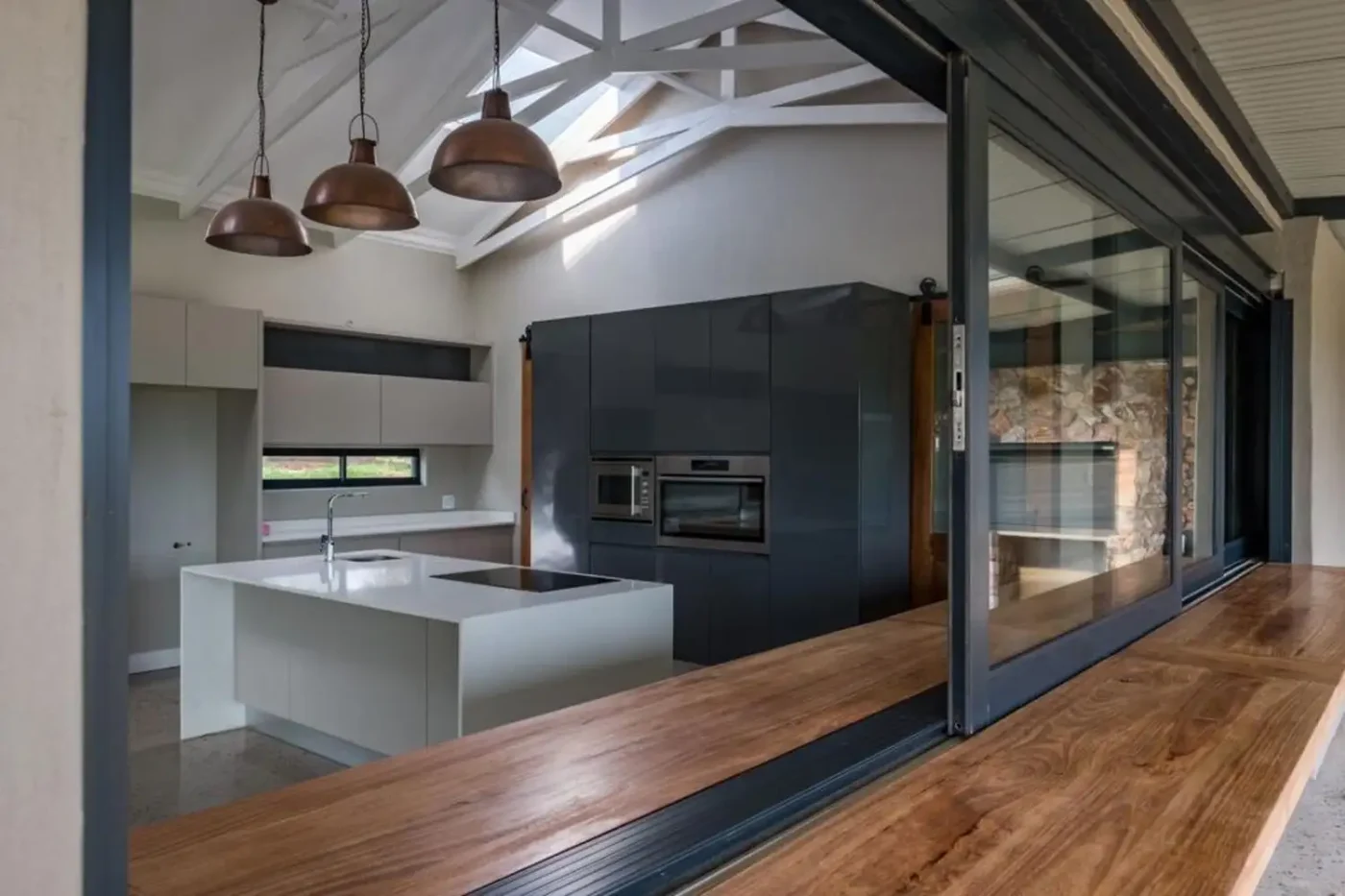
Highveld afternoon storms aren’t subtle — fast, heavy, wind-driven rain, occasional hail, on a near-daily rhythm through summer. How a door or window handles that isn’t really about the material at all. It’s about seal quality, threshold design, and how precisely the frame was set into the opening before the first storm ever tested it. A large sliding or folding system carries far more linear seal than a standard window does — the detail most buyers never think to ask about until water shows up at a track junction or a threshold they assumed was sealed properly. Hinged entrance and access doors depend on that threshold seal more than most people realise, since a poorly fitted gap underneath is both a heat-loss point and, in driving rain, a water-entry point.
Underneath all of it, sill drainage does the quiet work. A well-designed sill has weep holes that let water past the outer seal drain back outside rather than pool at the track — worth confirming directly with a supplier, since SANS weathertightness testing exists specifically to rate how a system performs under wind-driven rain.
Those same weep holes spend the dry months doing the opposite job. Fine dust, common through winter and the transitional seasons either side of it, works its way into sliding tracks, window mechanisms, and rubber seals — and the weep holes that drained a storm in summer are also where wind-blown dust tends to accumulate when there’s no rain to flush them naturally. A sill that’s never checked between storms can arrive at the next big downpour partially blocked, which is one of the more common causes of water pooling at a track that otherwise drains perfectly well. Simpler track designs, with fewer channels, collect less debris and stay easier to clean. Folding systems, with more track and more seals doing more work, need more regular attention than a straightforward sliding door. None of it is a significant burden with routine cleaning and occasional lubrication — it’s just fairer to set that expectation upfront than let the dry season surprise anyone in summer.
Aluminium Alongside Other Materials on the Highveld
Aluminium isn’t the only material that holds up here, and each of the alternatives answers a different part of the brief. Timber — particularly a denser hardwood like kiaat — holds its shape well through the Highveld’s daily temperature and humidity swings, and gives a warmth aluminium doesn’t try to replicate, provided it’s properly finished and the finish is kept up under the same conditions that test aluminium coatings. uPVC brings genuine thermal efficiency and low maintenance, with performance under UV load varying more by grade than aluminium’s does. Steel tends to sit in structural and industrial applications on the Highveld rather than residential glazing.
None of this is about which material wins. It’s about which combination of warmth, maintenance, budget, and thermal performance a specific opening is actually being asked to deliver.
Summary
The finish, the frame, and the seals and tracks — three things a Highveld year tests continuously, not just once a season. None of that is a reason to avoid aluminium; it’s a reason to ask the right questions about coating, thermal break, and drainage before the order is placed, since those decisions do more to determine how a product performs over twenty years than the material choice itself ever will.