
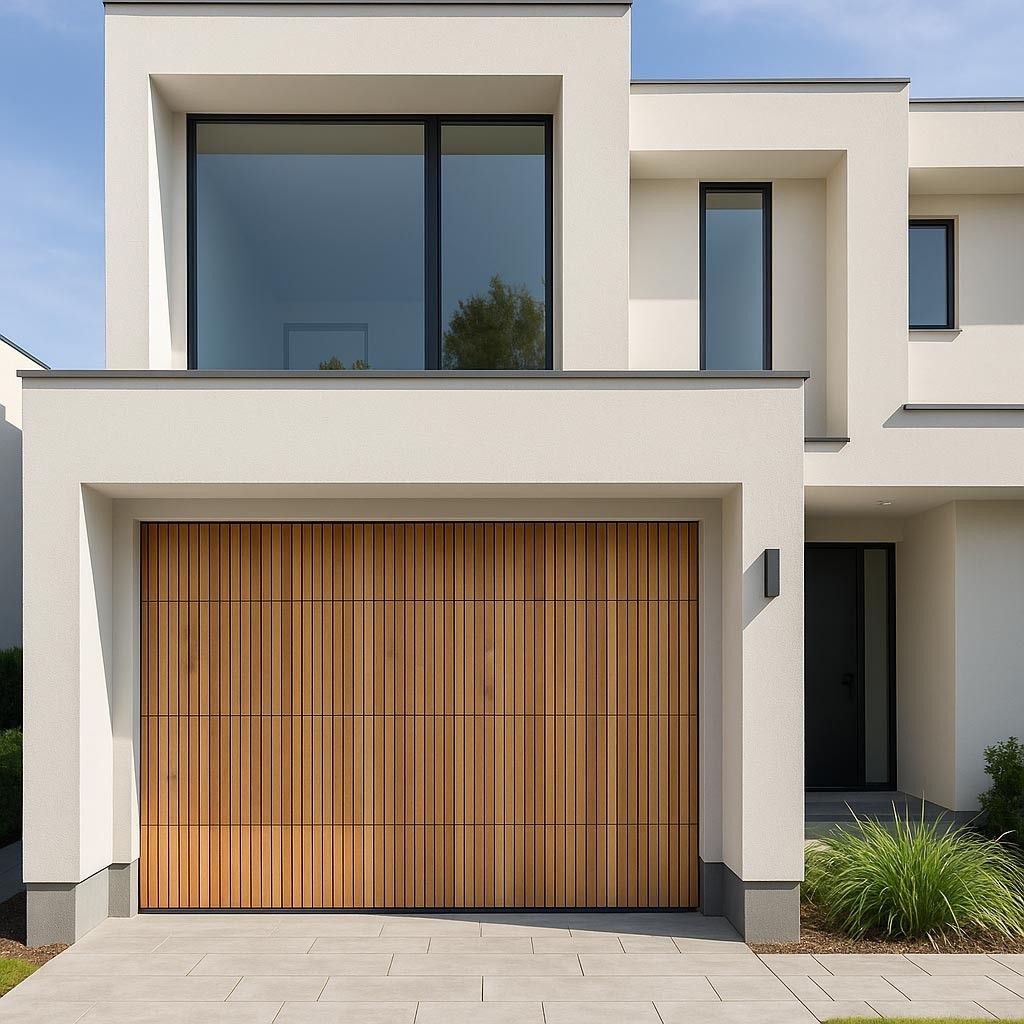
Your garage door occupies more facade space than any other element on most South African homes. Despite this visual dominance, garage doors often receive minimal design consideration—treated as purely functional rather than architectural opportunities.
The right garage door complements your architecture, expresses your aesthetic, and increases property value while performing security and storage functions flawlessly. After manufacturing garage doors for 38 years, Van Acht has identified design principles that elevate garage doors from necessary evils to genuine assets.
Understanding Garage Door Basics
Door Types and Operation
Sectional overhead doors consist of horizontal panels rolling up on tracks. Most common in South African residential applications, they offer space efficiency, weather sealing, easy motorization, and suit most architectural styles.
Roller doors coil around a drum above the opening, maximizing interior space and suiting contemporary aesthetics. Aluminium construction is standard but offers limited design customization.
Swing-out doors open outward like conventional doors, suiting heritage properties beautifully but requiring clearance space and making automatic openers more challenging.
Slide-aside doors open horizontally along the garage wall, working well when overhead space is limited but requiring wall space beside the opening.
For most homes, sectional overhead doors provide the best combination of functionality, security, weather protection, and design flexibility.
Single vs Double Doors
Double doors (5-6 meters spanning two-car garages) create clean, uninterrupted visual lines and bold architectural statements. They require robust construction and quality mechanisms but suit contemporary minimalist aesthetics perfectly.
Twin single doors offer more flexibility—open just one for single vehicle access. They’re easier to operate manually and create visual rhythm, though the central post disrupts some contemporary designs.
Your choice depends on architectural style, budget, and preferences. Contemporary designs often favor double doors’ clean lines, while traditional styles work well with twin singles’ proportions.
Material Selection
Wooden doors deliver natural beauty and customization unmatched by alternatives. Modern engineered wood (Versa-Wood technology) provides traditional aesthetics with improved durability and reduced maintenance. Wooden doors suit virtually any architectural style from contemporary to traditional. Best for homes where doors are prominent visual elements, all climate zones with proper finishing, homeowners valuing natural materials, and custom design requirements including CNC carved details.
Aluminium doors offer contemporary aesthetics through clean lines and slim profiles maximizing glass area. Lightweight reducing motor strain, minimal maintenance, and corrosion-resistant with various powder-coated colors. Glass panel integration creates striking modern statements. Best for modern architecture, coastal areas with marine-grade powder coating, low-maintenance priorities, and designs incorporating glass panels.
Steel doors provide maximum security and durability. Insulated options offer good thermal performance. Available with wood-grain embossing finishes. More affordable than wooden alternatives. Best for security-focused applications, commercial uses, budget-conscious projects, and locations prioritizing function.
Glass and metal combinations create contemporary statements. Frosted, tinted, or clear panels within aluminium or steel frames provide light transmission and architectural interest. Best for modern architecture, attached garages needing natural light, showcasing vehicles, and locations where security allows transparency.
Color and Finish Strategies
Matching home colors creates visual cohesion—ideal when you want doors to recede visually.
Contrasting for accent makes doors architectural features. Dark doors on light homes create dramatic definition in contemporary designs.
Natural wood finishes bring organic warmth and texture synthetic finishes can’t replicate.
White or off-white remains classic—clean, versatile, and suits virtually any architecture.
Bold colors (deep blue, charcoal, black) suit confident contemporary designs where doors are integral to the design language.
Consider South Africa’s intense sun—very dark colors on west-facing garages absorb tremendous heat.
Design Styles for South African Homes
Contemporary Minimalist: Clean horizontal lines, flush panels, minimal ornamentation, often incorporating glass panels with monochromatic schemes. Aluminium with glass inserts or smooth steel works beautifully. White, grey, or black colors create modern sophistication. Concealed hardware maintains uninterrupted surfaces. This style suits modern designs emphasizing simplicity and proportion over decoration.
Modern Farmhouse: Board-and-batten appearance with rustic texture, X-patterns, and traditional carriage house details reinterpreted with modern proportions. Wooden doors provide authentic warmth. Natural stains, whites, warm greys, or black for contemporary contrast. Decorative handles and hinges in black iron or bronze finishes add character. This increasingly popular style blends country warmth with contemporary aesthetics—perfect for properties wanting relaxed sophistication.
Coastal Contemporary: Light colors and weather-resistant materials designed for salt air. Clean lines often incorporate ventilation or light panels. Versa-Wood technology, aluminium, or quality uPVC resist corrosion. Whites, soft greys, light blues, and natural light wood tones hide salt deposits between cleaning. Marine-grade stainless steel hardware is essential for Cape Town properties facing direct ocean exposure.
Traditional/Heritage: Raised panel designs with symmetric proportions and classical details honor architectural heritage. Wooden doors or quality wood-grain steel in traditional configurations. Whites, creams, natural stains coordinate with home trim colors. Traditional decorative hardware—handles, hinges, window grilles—matches the home’s other fixtures. Perfect for heritage properties or new builds referencing traditional architecture.
Industrial/Urban: Raw materials celebrated through exposed hardware and bold proportions. Steel, aluminium, and glass combinations provide industrial authenticity. Greys, blacks, raw metal finishes, and bold accent colors. Functional hardware becomes design element—exposed tracks, industrial-style handles, visible mechanisms. This edgy style suits loft conversions and urban properties celebrating industrial aesthetic.
Maximizing Design Impact
Window panels serve multiple purposes: natural light entry for workshops, visual interest breaking up large expanses, and architectural cohesion with home windows. Frosted glass provides light while maintaining privacy. Top placement maintains better security.
Hardware details matter even on sectional doors. Decorative hinges and handles create traditional character. Concealed hardware suits minimalism. Custom carved panels or metal accents transform standard doors.
Proportion considerations: Smaller panels create division and interest; larger panels appear substantial. Horizontal emphasis creates stability; vertical emphasis adds energy. Break up expanses through color, materials, or windows to prevent overwhelming visual mass.
Frequently Asked Questions
Should garage doors match my front door?
They should coordinate, not necessarily match. Share design language—if your front door is contemporary minimalist, garage doors should follow contemporary principles. Think coordinated wardrobe rather than identical twins.
What’s the cost range?
Basic steel sectional doors: R8,000-R15,000 per single garage. Custom wooden or aluminium-glass combinations: R25,000-R60,000+ depending on size, materials, and complexity. Consider this an investment in your home’s largest facade element.
Can doors be insulated?
Yes. Insulated doors reduce heat transfer—important for attached garages or workspace. Available in steel and aluminium. Wooden doors provide natural insulation.
Manual or motorized?
Motorization adds R4,000-R8,000 but provides convenience, automatic locking, and easier operation for larger doors. Most modern installations include motors with manual backup.
What maintenance is required?
Wooden doors: periodic cleaning, refinishing every 7-10 years. Aluminium: occasional cleaning. Steel: check for rust. All types: annual hardware lubrication, track cleaning, and sensor alignment for motorized systems.
Design Your Perfect Garage Doors
Garage doors occupy too much visual space to be afterthoughts. The right design enhances your architecture, expresses your aesthetic, and delivers decades of reliable function.
Van Acht’s expertise across wooden, aluminium, and steel construction helps you choose doors perfectly suited to your home and needs.
Explore design possibilities: Contact Van Acht or visit any showroom to see examples and discuss your project.